Can we kill the “traditional” or “digital” agency labels already?

Agencies of the planet – just so you know, your label as “traditional” or “digital” or “social media” does not give you an inherent advantage of being able to relate better to any client, anywhere, at any time. Ever. It’s a label. Nothing more. And in the current state of the world, it’s an increasingly irrelevant one.

Most people are absorbing traditional media and digital media at once. I think we can agree that a whole lot of people use the Internet and a significant portion of the population is using social media. The fact you choose to concentrate on one of those is perfectly fine and good. Really. But to suggest that the fact that you specialize in those areas in and by itself means you are best at it is blowing smoke up a prospect’s rear end.

I’m talking to you too, specialists in certain types of marketing.

It’s great that you specialize in real estate advertising, for example. But you could still suck at it. Your creative could suck, your client service could suck, your strategy could suck, your media choices could suck and your ability to adapt to digital could suck. Or you could be awesome at all those areas and then some.

Either way, please don’t suggest that the fact you specialize alone makes you so much better than others. It doesn’t – until you prove it correct by making your case with your portfolio, your experience, your client feedback, your results, etc.

It’s shocking to me that anyone would want to stand on a pedestal without telling that story. “We’ve been in _____ marketing for X years so we’re uniquely equipped to understand your business.” Nice try. But I’m not convinced yet and nobody else should be either. Show me more. Tell me more. Best of all, show and tell me how all of your collective knowledge will benefit the challenge in front of me right now at this moment.

The agencies that connect the dots in this way for their prospects are the ones that win. The ones that think their labels alone will go a long way toward closing the deal?

I label that as lazy.

What do you call your agency in terms of what it does? And do your clients understand it? And how much do you rely on that label? Share. 

What would Burnett, Bernbach and Ogilvy think of social media?

I thought it would be fun to imagine what would happen if the three biggest titans of advertising — Leo Burnett, Bill Bernbach and David Ogilvy — came back to civilization for one week to provide their views on our modern day developments, most notably social media. Their lunch meeting might sound like this:

Bill Bernbach: Gentlemen, great to see you again.

David Ogilvy: And you, old boy. How was everyone’s week in getting reacquainted with the world?

Leo Burnett: Well, things must be going OK over at my old place. They haven’t taken my name off the door. Would any of you care for an apple?

Bernbach: No, but thank you, Leo. I suppose we should get right to what’s on our minds and a shock to our systems, eh?

Ogilvy: Indeed. The Internet. It’s quite a marvel. You can’t ignore it. It’s everywhere. And this social media is consuming everyone’s lives.

Burnett: I saw Facebook and at first, I have to say I wasn’t a big fan. There’s a big banner at the top that you can use to put a picture on, but you can’t do any promotional copy! What’s the point?

Bernbach: And the layout of these channels struck me — you can only customize them so much. I wondered what kind of world people are living in where such limitations are placed on copy and art direction.

Burnett: I didn’t love the fact that we’re not seeing the product benefit clearly with social media either, but . . . I think what I’ve come to accept is that it’s so very different from advertising. I’m actually not sure that some brands or perhaps even some agencies understand that, which is a tragic mistake.

Ogilvy: I’ll tell you, though — what I do appreciate about it is how people are using social media to listen to the audience. The research person in me loves that. Now if we can utilize this new technology to better understand what drives the audience to behave in the way they do and buy the things they buy . . . They’re actually sharing nuggets of insight if we’re just smart enough to listen.

Bernbach: There is one thing that troubles me. I’ve found in this new era that it’s very chic to label advertising as interruption. To the point of where some people are calling it “dead.” I just don’t agree with that assessment — not at all.

Burnett: Agreed. When it’s a lousy ad, you can consider it interruption. We have always started from a position where we are an uninvited guest at their dinner table or in their living rooms trying to earn their trust. When it’s a great ad that makes you laugh, cry, think . . . feel anything, that’s what I call a welcome surprise. A person can look forward to that again and again. If we know how to reach for the stars in what we create, that is.

Ogilvy: People are triggered to hate advertising because so much of it is not very good. But that doesn’t mean it should be eliminated, nor does it mean that you can’t compel the reader to wave a banner in your brand’s favor. Electronic devices to keep advertising out be damned — people will beat a path to your product or service if you know how to speak to them. That held true in our time, and it holds true today.

Bernbach: I do like websites and blogs a bit more for the creative freedom you can have — and at the same time, what brands are able to control. Like anything, it’s got to be an interesting, imaginative and fresh experience. And it’s entirely possible for the person visiting to be immersed in the brand on a website. Some copywriters and graphic designers these days complain about how it’s not the world that it used to be when they worked on traditional ad campaigns, but is there not an opportunity for great copy and great design on the web?

Burnett: Right. I don’t see the difference. Doesn’t a website need exceptional art direction? Doesn’t a blog require outstanding writing? If it’s not a TV spot, doesn’t it need to be an entertaining video to hold the person’s attention?

Ogilvy: Yes. When TV came along, it changed so much about what we did in some ways, but in other ways it didn’t change a thing. The type of media was different, but just as ever, we still needed to make the experience for the person absorbing our advertising into something magical.

Burnett: So you believe social media can be magical, too?

Bernbach: After that first impression that jarred me, I can say I do. The way to artfully tell a story has always required an element of sophistication that speaks to the audience with respect rather than a “buy now” message that hits them over the head. Whether it was Tony the Tiger, a Volkswagen or the man in the Hathaway shirt. We have always had to work so hard to be invited into people’s homes, listened to, accepted and championed. Now we have to work just as hard to be invited into their computers and their social circles. What’s changed, really?

Burnett: True. But there is something special happening. There’s no doubt about it. You know it when you hear the term “revolution” kicked about like it was in our day. That’s exciting. Yet what’s equally exciting to me is the principles we lived by in our time are still relevant today — as you said, storytelling for a brand.

Ogilvy: We still have a little bit of time — is there anything else from today’s era we love?

Burnett: Absolutely. I’ve seen it and can’t get enough of it.

Bernbach: What’s that, Leo?

Burnett: “Mad Men.”
(Originally ran here in Crain’s Chicago Business: http://www.chicagobusiness.com/article/20120404/BLOGS06/120409908/what-would-burnett-bernbach-and-ogilvy-think-of-social-media#ixzz1rkxEaX7E)

In Search of the Biggest Brain in E-Couponing

Being the first to launch an idea in the business marketplace often gives you a great head start as a leading authority, but it doesn’t guarantee long-term success. Because one thing is for certain: The minute you think of it, the next minute someone else is going to try to get in the game with something better.

Take the e-coupon market, for example. There’s Groupon. There’s LivingSocial. And now we have Google getting into the action with Google Offers.

All with slight differences but all still functioning from the basic premise that each day you have the opportunity to take advantage of an offer from a local business.

It’s worked well for Groupon up to this point, so well that they had to reject a multibillion-dollar buyout from Google.

But that was then. Now the stakes get raised beyond deal versus deal, the competition really begins and things get interesting.

The problem with couponing sites is that at their very core, they offer no brand loyalty unto themselves. They can offer discounts to a variety of places and, yes, if the coupons of one site appeal to you more regularly than another site, you may wander over to that site more frequently. But even if they have great deals, that’s not enough to keep you going to that one site over another.

And while the three sites mentioned are the predominant players, it’s not terribly difficult to get into the e-offer game.

The true winner in the Groupon/LivingSocial/Google Offers war will be based on four factors:

• Personalization and “learning”

• Sharing

• Mobile integration

• Vendor relationships and control

The coupon site that accomplishes all four will be the brand that wins the greatest loyalty, and that’s no minimal thing.

Personalization and “learning”

The time has passed for offering generalized buckets of coupons for a city or neighborhood or even coupons based on event preferences. The winner here will be the site with the biggest “brain.” In other words, the site that has the greatest capability to learn what you like most and suggest offers that fit your lifestyle preferences.

Much like how StumbleUpon might learn your news preferences or Pandora might learn your music preferences, it’s the offer site that learns your favorite places and connects you with them that will grab the greatest market share and loyalty. You select more, it gets “smarter” in its suggestions. You thumb it up or down (or something similar) to help it “learn.” It’s not a matter of who has this capability first as much as who does it best.

True, some people like being surprised by offers outside of their preferences now and then, giving them options to try something new. But it stands to reason that many more will want to stay within their range of things they like to do.

Sharing

The ease (and fun) of sharing offers with friends is such a given that I’d almost not mention it, but it is that important. You must have the ability to share coupons with ease on any major social media channel and, assuming you’d like them to, your friends should be able to see the kinds of places/events you like to frequent so they can take advantage of those offers, too. Much like Facebook’s Timeline feature, you should be able to see where your friends went so you can get in on the action, if not this time, then the next.

Mobile integration

Pay-by-smartphone is going to become even bigger in 2012, to where you can use your phone at an establishment or venue to purchase what you need. The coupon site that integrates this functionality into its offer system is going to smoke the competition as more customers in the mainstream adopt this convenient feature and get comfortable with it. It’s not a “nice-to-have.” It’s a “must have.”

At the moment, Google’s ability to merge its Offers with Google Wallet is a strong indication of just how formidable the company could be in this area. When its programs stand alone, Google’s offerings historically can be a hit or miss. When they tie programs together, such as where you can pay with your smartphone and show a coupon, Google becomes a competitor that’s difficult to ignore.

Vendor relationships and control

Of course, when you’re talking about small-business merchants, you can’t relate to them on code alone. If the coupon war is won on the ground, you have to cultivate relationships through sales people. Groupon has a strong head start here in terms of sheer number of sales reps getting small businesses to enroll. That is, unless too many of them are overaggressive reps like the ones described by a former Groupon employee in this TechCrunch article. Yikes.

Who wins? For brand equity, it may be none of them.

I like the potential of Google Offers best in terms of the technology it utilizes. But the one Big Asterisk on all of these e-coupons for businesses to consider: From a brand standpoint, I hate it when price is the lead factor in getting someone to come through the door. The argument may be that e-couponing gets new customers you didn’t have, but I would like to see more businesses go for building loyalty among their best, most frequent customers who can spread word-of-mouth than for mechanisms that aim to get the most bodies through the door at all costs, because I’ll bet a decent number of them aren’t really that loyal as the ones you’ve had already.

Originally printed in: http://www.chicagobusiness.com/article/20120208/BLOGS06/120209804/in-search-of-the-biggest-brain-in-e-couponing#ixzz1qBbg4GXG

Political Candidates Must Vote For Social Media Early and Often.

No matter what side of the left or right you sit on issues, the actions of one candidate pose a good lesson about where social media should rank in terms of political campaign clout.

Even though he’s running a distinct 3rd (or 4th if you were looking at his results here in Illinois), it’s a tad mystifying to me that Newt Gingrich has decided to pour so much of his budget into social media at this late stage of his campaign. Not that this is a bad move at all but the timing of it is unfortunate for him as it appears in his case that using social media seems like a method of last resort when campaign staffs get slashed and budgets dwindle. If so, that’s a lousy view of how to use it. If we didn’t learn anything from 2008 politics, it’s that social media has officially arrived as a standard and absolutely essential component of any campaign’s success, Republican or Democrat.

Regardless of whether you’re running for President or Alderman of Chicago’s 44th Ward, you can’t see social media as an afterthought. You have to see it as a vital investment right out of the gate to help mobilize your supporters and encourage fluid communication. Without it or without much consistent use of it, you’re pinning too much of your hopes on traditional methods. And while you still have to get out there and press the flesh of potential voters to be relevant, you can’t ignore the undecideds behind a computer screen who might be searching for clear positioning points of view of your candidate.

It just proves once again how important it is to have good planners behind the scenes who can truly make or break these “brands” with how they select media and craft the right message. It’s really not that far removed from how we strategize the success of products and services.

Special rate for our readers to see Seth Godin, Gary V. and more!

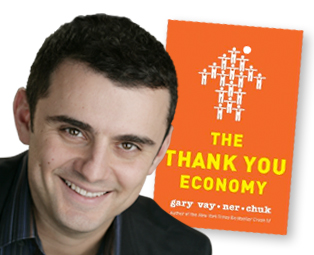
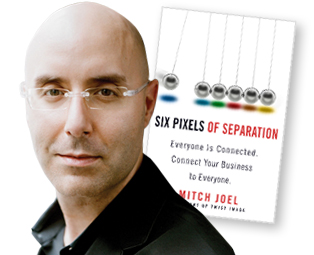
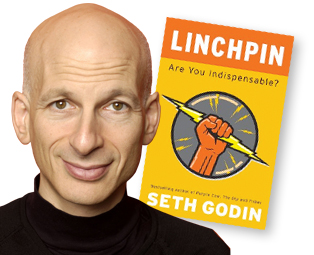
Seth Godin. Gary Vaynerchuk. Mitch Joel. Randi Zuckerberg. Keith Ferrazzi. Avinash Kaushik.

Hearing one of these influencers in the world of social media and marketing is rewarding in itself. Hearing from all of them in one day is what I call one awesome intelligence download. Which is exactly what you can do when you join me in attending a special conference called The Art of Marketing, coming to The Chicago Theatre on Tuesday, April 24th.

If you want to get a better handle on metrics and analytics, creativity, brand development, marketing strategy and where social media is headed next, this is money well spent.

Especially since you can spend less of it as one of my readers.

That’s right. I’ve just been offered a special preferred rate from the event’s organizers to pass along to readers of Chicago Brander. Drum roll, please……

Special Offer:

Readers of chicagobrander.com will receive a savings of $50.00 per ticket or $100.00 per ticket when registering 3 or more people at the same time. This is a great deal as the regular price to attend The Art of Marketing is $399.

The promo code you can use when registering online is SK23 or by using this link:  http://www.theartof.com/marketing-chicago-2012/register?promo=SK23

To learn more about this incredible event, visit the event’s main link at: http://www.theartof.com/marketing-chicago-2012

For questions, call 416.479.9701 / 1.866.99.ART.OF

Hope to see you there for what should be a sold-out event!

Dan