10 Keys To Maintaining Your Brand’s Soul

The idea of greater sales sounds, well, great. But when you think about expansion, have you considered what the consequences of what the move is going to be on your brand, your culture, your people? Many companies don’t. There’s no reason why sales should be on the opposite side of these considerations, especially when it doesn’t have to be.

With this in mind, I created a checklist that can help you decide if a company sale, increase in hiring, large investment in equipment, new distribution channels and ramping up of production will come at the expense of your brand.

10 Keys To Maintaining Your Brand’s Soul

  1. Does a move in the name of greater sales feel at odds with our brand and what we believe?
  2. What does our mission statement look like? Is it iron-clad with character and personality with little room for interpretation by future generations on what we stand for or is it like most mission statements – an ambiguous note of blandness that anyone could own?
  3. Will a move in the name of greater sales anger, irritate or even mildly annoy our most loyal customers (in other words, are we biting the hands that fed us)?
  4. Is our location (physical location, branches, 800 number, website, blog) a “mecca” that people enjoy coming to over and over again, whether they are our customers or our employees or both?
  5. Will a move in the name of greater production risk compromising our quality, customer service and reputation?
  6.  Do we refer to the “good old days” of this company or do we refer to how great it is now?
  7.  Does a technological upgrade feel easier and more efficient but less warm, friendly and true to who we are in terms of a human approach?
  8. Will we still be an organization that likes to have fun?
  9. Will our success be measured primarily in sales volume or will we hold up shining examples to the public of  goodwill we’ve gained?
  10.  What about us will never, ever change no matter how much money someone waves in our face?
Let’s see what we can add to these 10, shall we?

Agencies and marketers can only afford so many trips down Memory Lane

We in the advertising and marketing business like to reminisce about our own industry as much as anyone. We like to look back on the work of Bernbach, Burnett and Ogilvy in reverence. We talk about the “Think Small” ad, the “We Try Harder” ads for Avis, the Levy’s Jewish Rye ad and the man in the Hathaway shirt. I love those classics too.

But we can’t resurrect efforts that need to lie in the grave where they belong. For example, Michigan-based Domino’s is bringing back The Noid for a week. I know it’s only for a week, but why? Some people have had a passing fascination with one of the world’s weirdest mascots ever, I’ll grant that, but I’m enjoying what Domino’s is doing with their “Oh Yes We Did” effort. They’re taking on their harshest critics, admitting where they screwed up and having people vote on the product (“Rate Tate’s Chicken”) like never before. They’re even putting reviews up in Times Square.

Putting opinions of the food one way or another aside, I believe Domino’s is working harder to improve themselves and appreciate putting themselves out there in the truly interactive environment we’re living in. It’s rare, refreshing and gutsy. More companies should be doing it.

Don’t confuse this with mascots that have stuck around for years. I’m not suggesting that Planter’s should suddenly off Mr. Peanut or Frosted Flakes should fire Tony The Tiger. I’m suggesting that if a long dormant mascot/brand effort went away, maybe there was a good reason for it and we don’t have to bring it back. Maybe we can challenge ourselves to come up with a better idea that applies to the current generation instead of becoming Hollywood and remaking classic movies because we know they were great back in the day.

Advertising has been called a young person’s business. But you know what makes a young person old? It’s not age. It’s mentality. A veteran ages by the word every time they say things like, “Gosh Ed, do you remember 20 years ago when we worked on the ____ campaign? Those were the days. Somebody needs to do something like that now. Kids today don’t do enough of that kind of work.” OK. So you do that kind of work. Why not? Because agency politics prevent it? Because the client won’t let you? Please. If you’re going to get fired up and passionate about the work that was done in the 80’s, show at least the same passion if not more for the cool technology and applications that we’re just beginning to see. Begin to understand it and embrace it. Get revved up about QR codes and projections on buildings and Google Plus – not because you’ll necessarily DO that for a brand or yourself but because it represents evolution. And evolution can be as exciting as what’s been done if not more so.

In other words, for every time you re-read “Ogilvy on Advertising” (as I am), make sure you’re absorbing a boatload of books, magazines and blogs speaking to the changes in the way we’re communicating and what lies ahead. Until we find the real thing, that’s as good a Fountain of Youth I know.

How big will your company get before you get bad?

As he was pondering the idea of expansion many years ago, the late Jay Chiat of southern California ad agency Chiat-Day once thought, “Let’s just see how big we can get before we get bad.” As such, the volume of work increased, the agency grew and although there were still “home runs” of memorable work in the bunch, it could be argued there were fewer of them.

It’s a question that many wonder but few can concretely define – how big can a company be to reach its peak of effectiveness and brand equity before it begins to be tarnished? It’s one that even us in the advertising and marketing business can’t agree on (5 people? 30 people? No more than 100 people?). How much work should we agree to come through the door in order to balance the quality of what we believe in delivering with what we want to achieve in revenue?

It’s something Goose Island has to seriously ask itself in a new era. One of our city’s greatest beers, the popularity of Goose Island has only grown and grown until it was recently sold to, of all companies…Budweiser. Now, anybody who knows a beer “purist” understands that this amounts to a cardinal sin. But then, on top of that startling twist, came news that Goose Island was moving production of its popular 312 line of beer from Chicago…to New York.

There’s nothing wrong with a beer company wanting to sell more beer. And from what I’ve gathered from client experience, it’s certainly not easy being a craft brewer. You want to stay true to the ingredients that make for a better beer, you want to build distribution channels and you want to do right by the loyal fans who chose you over visibly cheaper options. Yet, as you expand, you have to ask yourself at what level does increased production compromise what you’ve built? Is it worth it if it comes at the expense of your brand’s heritage or your most die-hard fans?

In contrast, take the example of the Boston Beer Company, brewers of Sam Adams. Founder Jim Koch brewed his first batch of beer in 1984, debuted it in 1985 and within a year expanded beyond Massachusetts to Connecticut. He would also expand to breweries in Ohio and Pennsylvania. Now you can get Sam Adams in many grocery stores, yet Jim Koch never sold his company to all the big macrobrewers who came calling.

I don’t expect Greg Koch of Stone Brewing Co. (no relation to Jim) to sell to the Big Boys of Beer either. Yet Stone Brewing enjoys large distribution and has grown by 50% every year. He is a self-described “beer geek” and as such found a calling. It’s not his goal to dominate the beer world. And he doesn’t want to sell to the “generic” consumer because he believes those consumers will only choose safe and familiar – even if they know those choices are not the best choices. Could Greg Koch sell to Budweiser, watch Stone get distributed in even more places and see oodles of money roll in?  He could. Easily. But it wouldn’t be true to his brand’s heritage and values. And since he is the poster boy for craft brewing, it would be hypocritical to his very core to sell to a giant brewer (just view his keynote at the 2009 Craft Brewers Conference, “I Am A Craft Brewer“). You’d stand a better chance of seeing Wrigley Field re-named Cardinalville.

Perhaps a sale to Budweiser and production moving out of Chicago doesn’t mean much to the average beer drinker. But considering the company they keep in the craft brewing community, it should’ve mattered more to Goose Island. Founder John Hall says he hopes to return to all brewing to Chicago within a few years with a new plant that’s built here.

While I look forward to that day, let’s hope he hasn’t alienated too many people by then.

What about you? Have you defined a set of values that guide your company so concretely that increased sales and distribution are always on the same page as your brand without compromise? You don’t have to brew beer for a living – regardless of industry, feel free to share them here.

First look inside State Farm Next Door : An environment in an innovative State.

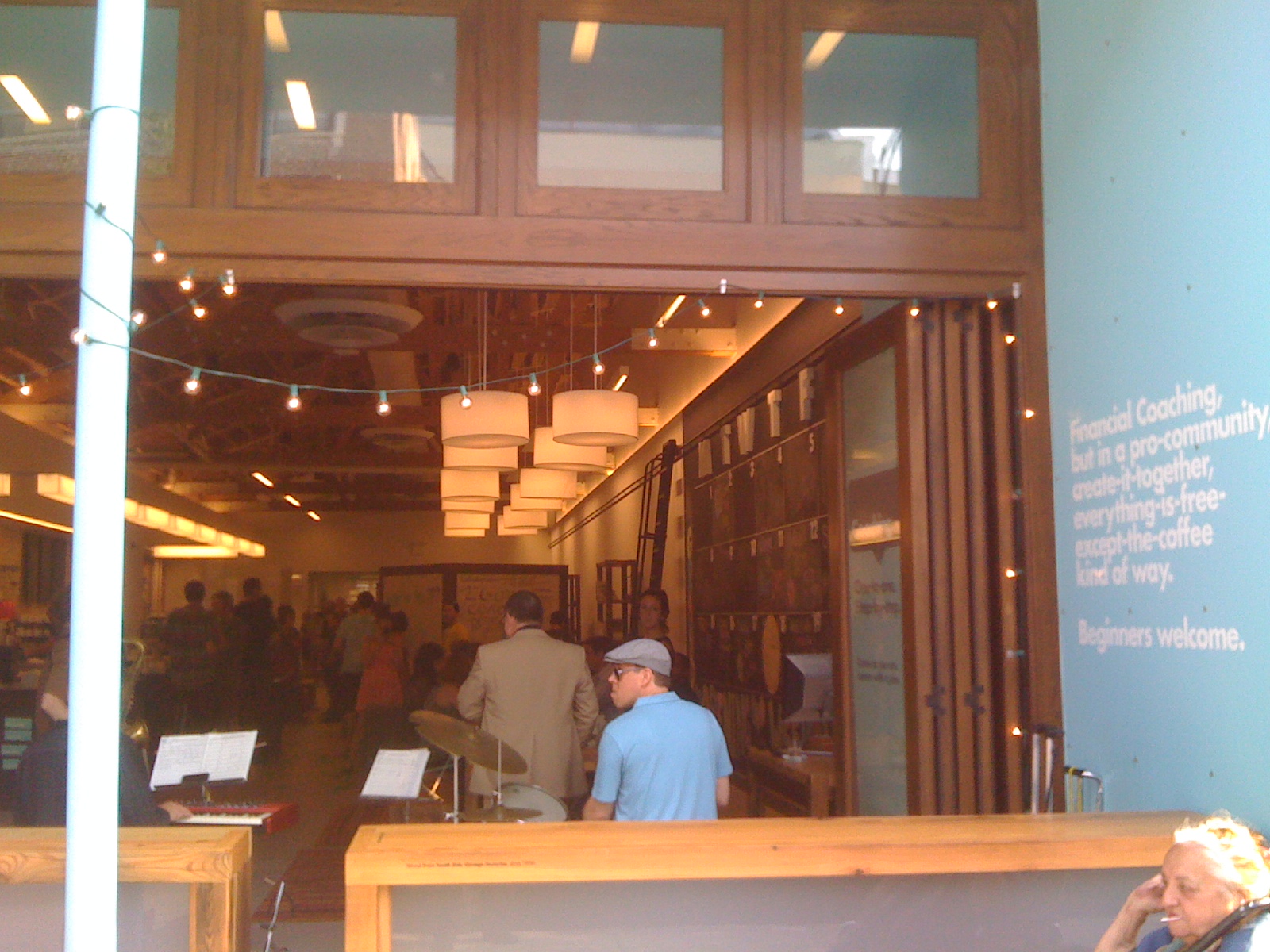
As I started to make my way up Diversey Avenue, I heard the clamor of a jazz band playing near Trader Joe’s grocery store.  That couldn’t be coming from State Farm, could it? Surprisingly, it was. And already in that moment, I think that maybe, just maybe, I experienced a small piece of what State Farm is striving to do with its new community-based effort, State Farm Next Door.
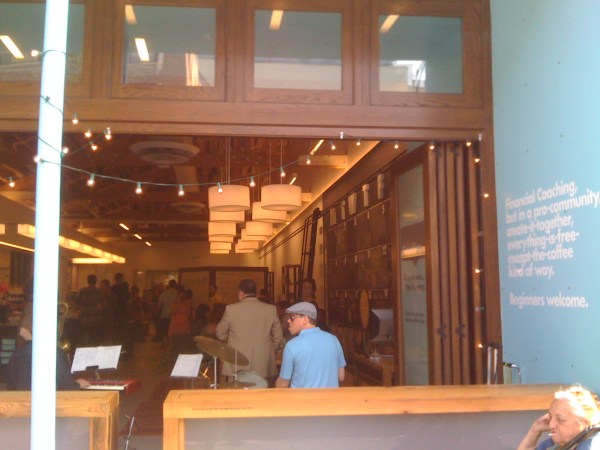
The "teaser" wall is down. We're going in.

State Farm was nice enough to invite me to a pre-launch party for select guests to come experience Next Door for themselves. I’m happy to say it did not disappoint. It honestly exceeded what I thought I would see. Along the way, I got to sit down with the managers, planners and vendors who showed me what people could expect from Next Door when it officially opens on Thursday, August 11th.

Is it OK if we have fun in here? Cool.
If this was some thinly-veiled approach to selling services, I seriously didn’t feel it. Really. The subtle references to finances and planning are there, but you get the sense that State Farm has been extra careful not to come across as heavy-handed in selling. If it was too pushy, it just would not work. Period. And thankfully, they know it.

We’re really making a conscious effort to let people come in, discover Next Door for themselves and make it their own,” says Stephanie Reynolds, Next Door’s Store Manager. “Our atmosphere here is all about making it the most creative and collaborative experience possible. It’s not our goal to try to sell. But when they do ask, we want to make consumers more educated and confident about their financial future in a very comfortable space.

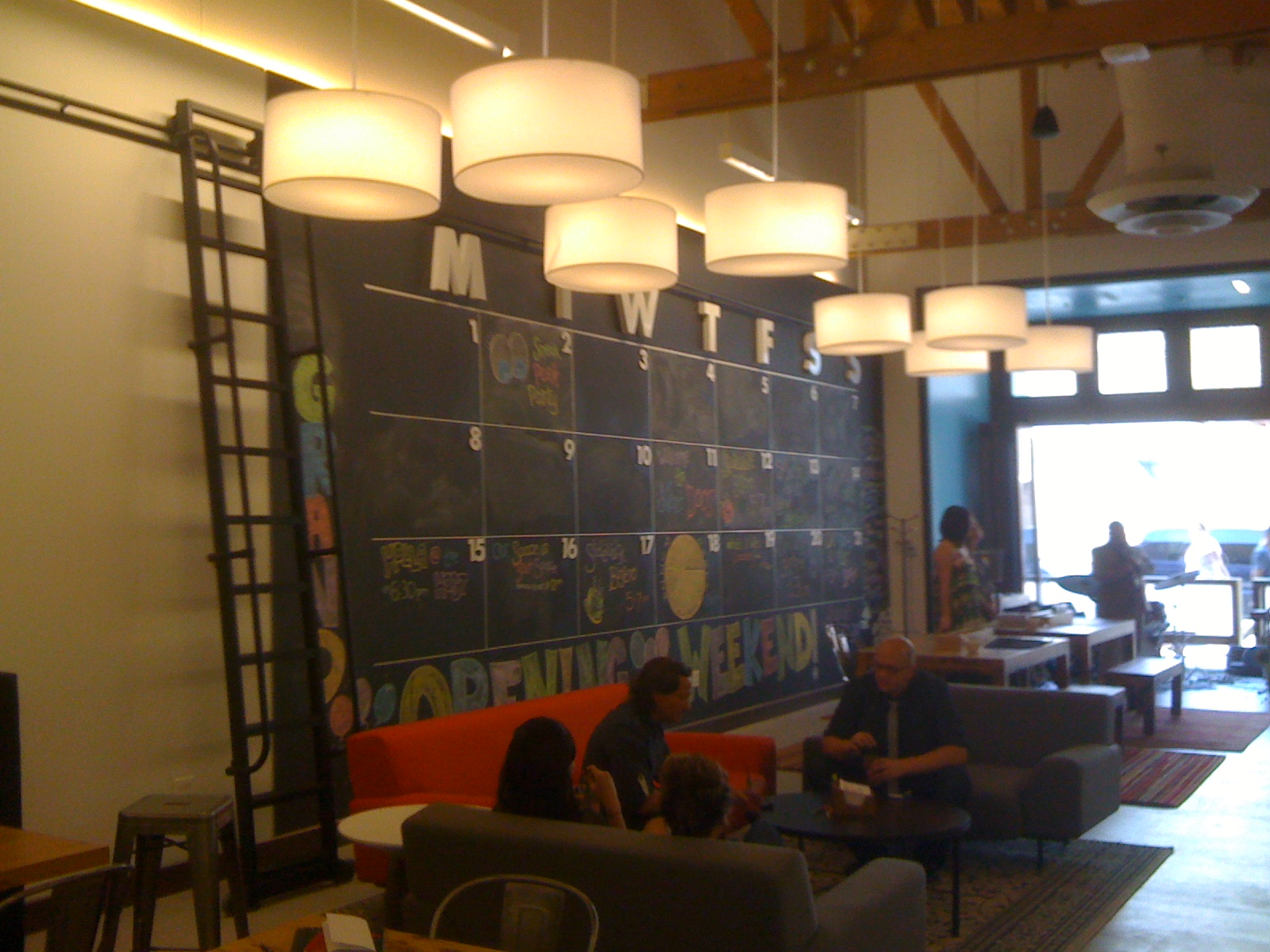
Like a Good Neighbor, State Farm is There. With a cool lounge area.
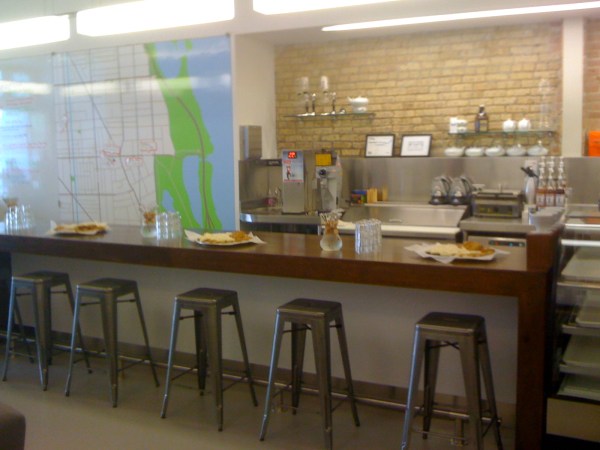
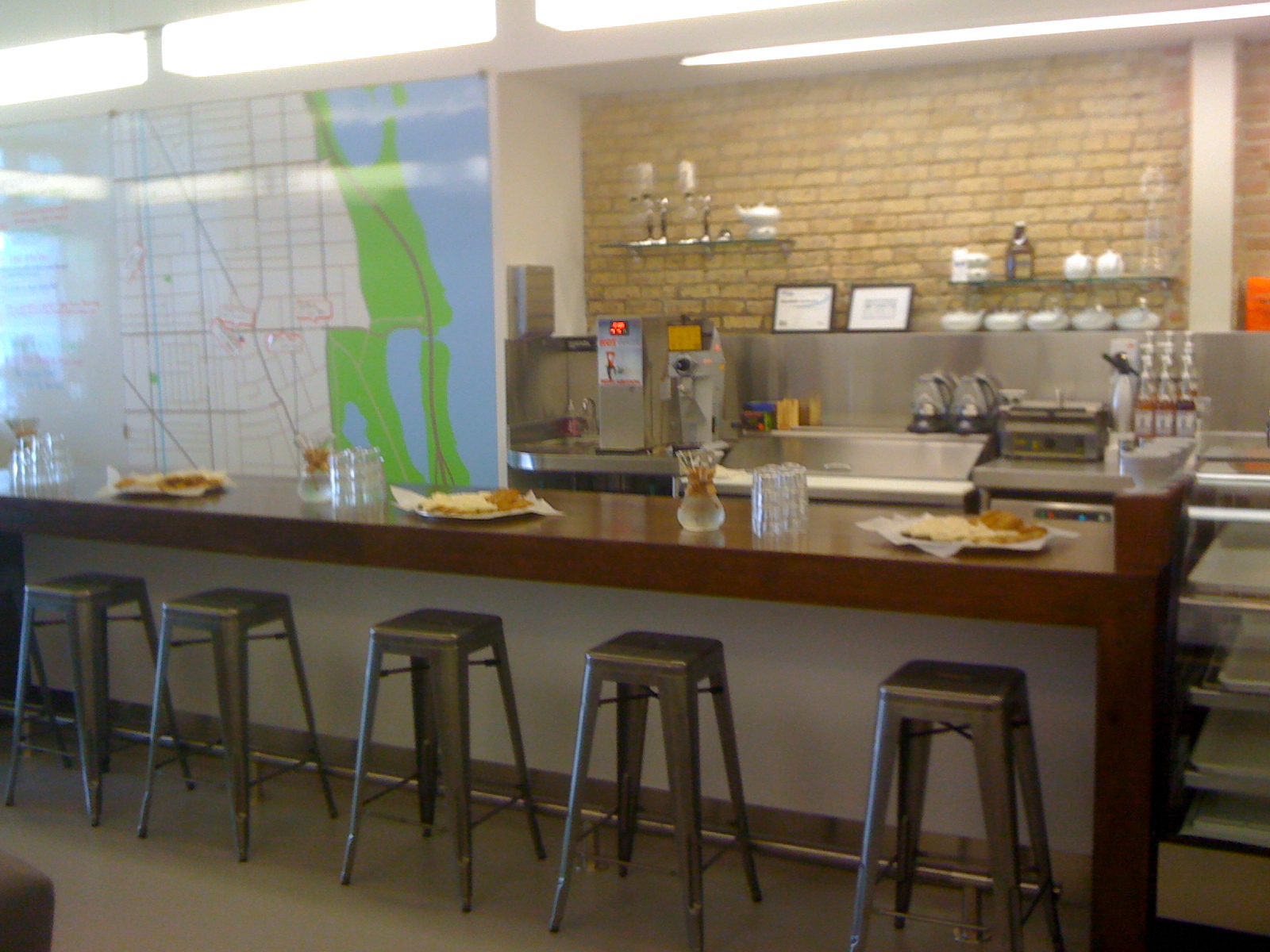
Wander over to the cafe for a gourmet espresso.

Some of the features of Next Door include:

  • A cafe area serving gourmet coffee, tea and espresso as well as baked goodies
  • A main lounge that features large red, black and grey couches with coffee tables
  • A smaller “creative” area featuring little white tables you can draw on and a projection wall that can show TV shows, movies…anything
  • A huge community chalkboard calendar that promotes all kinds of monthly events, from classes to pizza parties
  • 2 conference rooms with flat-screen TVs and whiteboard wall dividers (which you can rent for free, by the way)

And of course, those Pods.
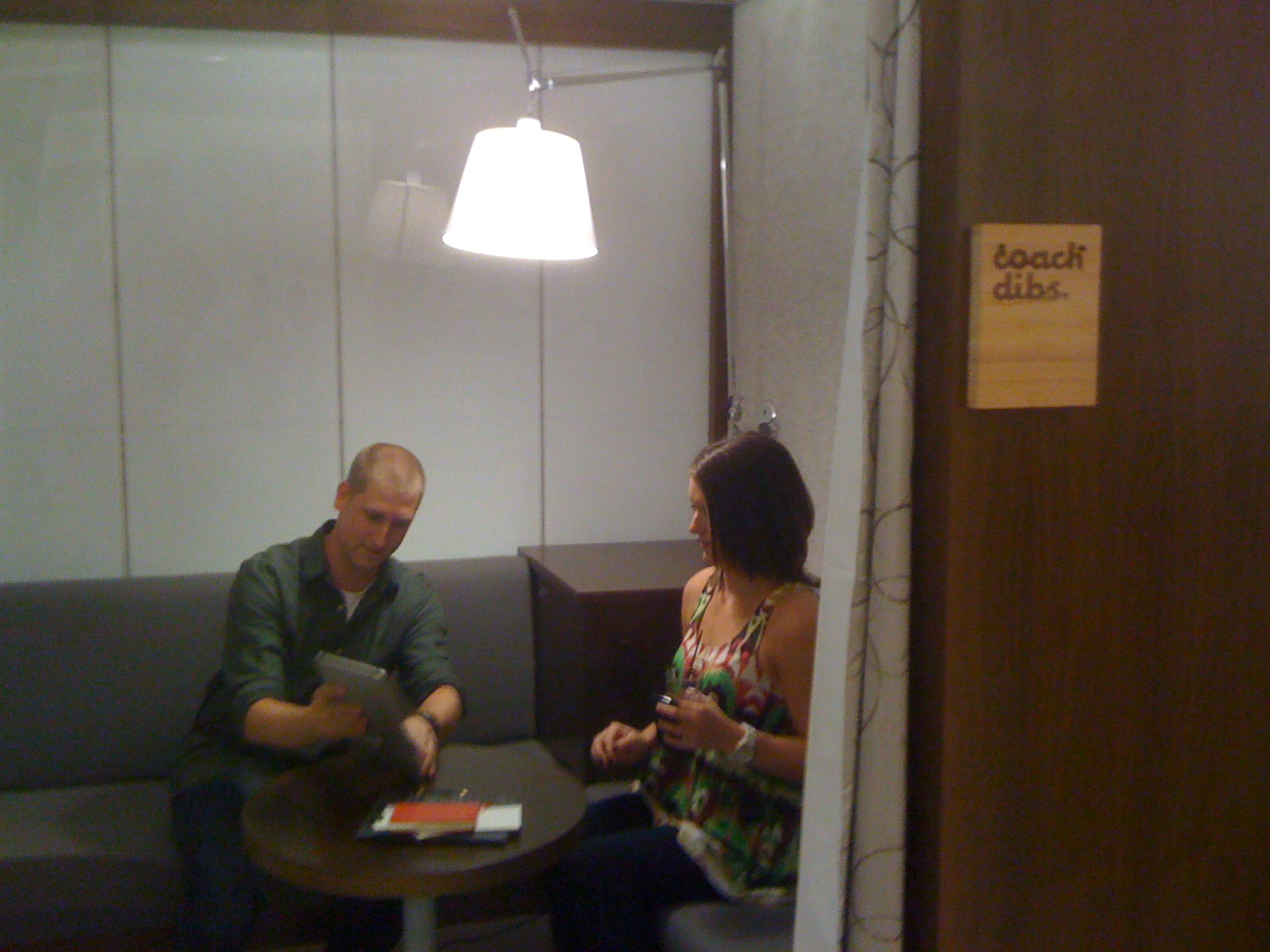
A lot of these design elements are, dare I say, fun and creative. Still, you might be wondering, “OK. But let’s get real. What if I want to get into some sensitive financial stuff? I can’t just discuss this out in the open in a cafe.” State Farm considered that. A financial planner named Adam showed me one of the “Pods” that a planner can take a guest or two into to get more privacy for financial-related chatter. This is probably my favorite feature of the place – these things look right out of the IKEA catalog and are just as functional. You can roll them to different parts of the store if need be.
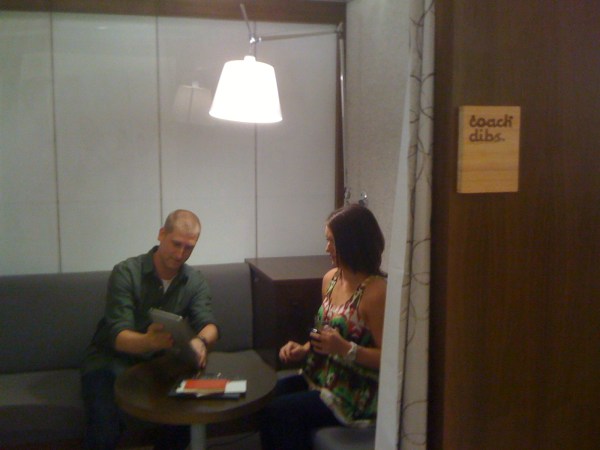
When you want to chat about finances, step into a Pod with a planner.


“You learn from us. We learn from you. We’re all smarter for it.”

We’re entering a new phase beyond just the “pop-up store” where people can try products for a few days before a temporary store is disassembled. It’s a phase of Store As Audience Research Tool. Maybe you think you’ve seen this before but trust me, you probably haven’t. Very few stores if any have been set up almost exclusively for the purpose of learning and understanding the behaviors of its audience in the way Next Door has.

I’ve heard a lot of questions about ROI and metrics of success for Next Door. So let me just say this – there’s absolutely nothing more important in branding than knowing what your audience is thinking. It’s elusive. It’s shifting. It’s hard to interpret. If it was easy, everyone could do it and I’d have to find another way to make a living. So when you effectively set the stage for that audience to come to you and tell you their thoughts and feelings, you’ve got an invaluable environment worth keeping. Some of us have run focus groups where we’d have to practically bribe people to show up, right? Well, how about someone who voluntarily comes into your environment, has a few questions, winds up signing up for a seminar given by one of your people and returns with 5 of their friends to learn more?

For Brett Myers, a key head at State Farm behind Next Door, this represents months and months of intensive, detailed planning. It’s not a stretch to say every single table lamp, book, piece of glassware and paint color has been obsessively considered prior to entering this space – by the way, do you think about your own environment in reflection of your brand with this kind of detail? Maybe you should.

Strange as it may seem to some marketers in such a research-driven world, it’s not about number of meetings taken in the Pods. It’s not about guests converted into customers. Or number of cups of coffee sold.

It’s about getting consumer feedback and lots of it. It’s about understanding the real fears and questions that a young target has. And it’s about taking all that feedback and reporting it back to State Farm corporate so they can use it for all kinds of initiatives – undoubtedly to ensure that the brand is speaking in a voice these consumers want to hear.
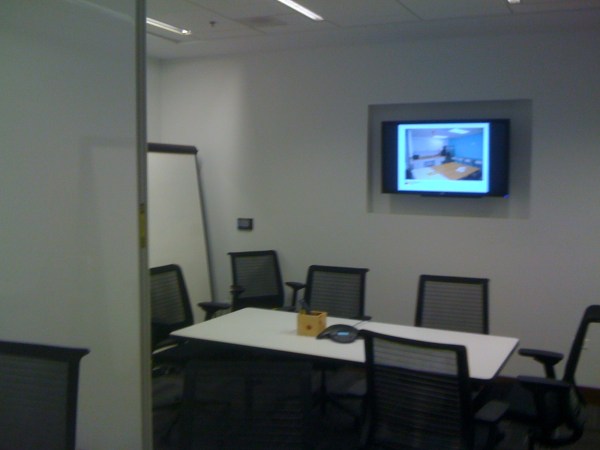
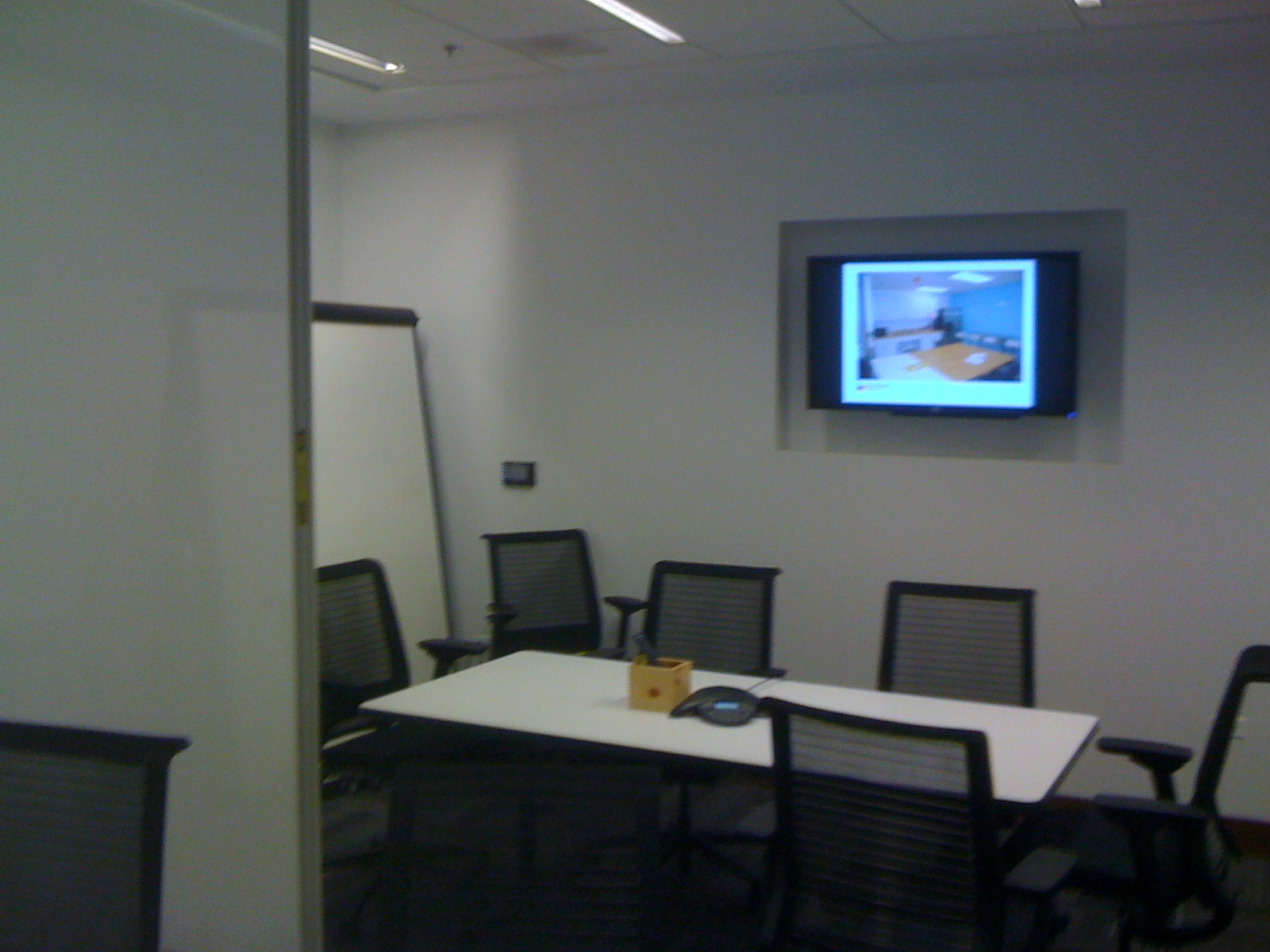
Anybody can rent one of these conference rooms for free. Really.


Partnered with Doejo

To get the cafe portion of Next Door off the ground and give it a feel authentic to the neighborhood, State Farm partnered with Doejo, a digital agency whose founder is behind several independent Lincoln Park/Lakeview coffee shops, including Kickstand and Noble Tree. As Darren Marshall of Doejo explains, Next Door will revolve and evolve around those who enter.

We’re very interested once people start coming in because their feedback will help shape this space,” says Marshall. “When you think about it, a coffee shop looks and feels different one week to the next because of the people inside it more than anything. It’s the same way here. In some respects, this store may look different 30, 60, 90 days from now and if it does, that will come from what the consumers within it tell us.”

While Doejo will concentrate primarily on the cafe portion of Next Door, their team may very well collaborate with State Farm when necessary on ideas involving the overall environment.

Special thanks to Desiree Fuzak, Stephanie Reynolds, Brett Myers, Darren Marshall and many others on the State Farm Next Door/Doejo team who helped provide me with their insightful thoughts for this post. 

Memo to a Mayor: Make Chicago the most socially connected city government

A couple months ago, I heard Chicagoland Chamber of Commerce President Jerry Roper tell a story of how Mayor Richard J. Daley (that would be Chicago’s first Mayor Daley for history buffs) used to instruct staff members closest to him to always carry a pad of paper with them. That way, when they saw something in their daily lives such as a pothole in need of fixing, they would jot that down and give it to the Mayor. I’d like to think the pothole in question then got promptly fixed.

I can also remember Newark Mayor Cory Booker speaking on Piers Morgan’s program on CNN about how he successfully used Twitter this past Winter to quicken emergency response times toward those residents trapped by a snowstorm.

Some say these examples are from long ago or apply to a smaller city than our own. But really – is the notion that Chicago be the most socially connected city be a pipe dream? No. I don’t think so. In fact, I believe we have the tools and resources to make this possible. And I think a relatively new Mayor in Rahm Emanuel is the perfect opportunity for renewed advocacy and accessibility with governmental leaders.

Let’s start with the ground level.
If someone sees a pothole, we may complain about it and say, “somebody should fix that.” Or we could snap a picture of it and tweet it to an alderman or City Hall with the location of where it is. At the end of this post, I’ll give you their Twitter handle if they have one. Easy enough? You know it is. You have time to use your phone for good in between games of Angry Birds.

Getting City Council More Social
Every Chicago Alderman should set up with a Twitter handle so they can be sent questions in the form of tweets from their constituents and respond in kind. Or use it to listen to relevant conversations going on among Chicago’s most passionate citizens. Currently, only about 1/2 of the 50 Wards have Twitter accounts and several of those are poorly updated (but glad to see my neighborhood’s Alderman, Tom Tunney, doing a good job with the tweets – @AldTomTunney). For more in-depth postings that incorporate pictures and video, having a Facebook page is not the worst idea, particularly since most constituents are likely on Facebook if they are not on Twitter. All you need once you’re set up with an account is to be responsive to the people who most likely live in your designated area – which is, after all, what you were elected to do, right?

Town Hall meetings
What works for President Obama can work at the very localized level too – broadcast Town Hall meetings or other types of monthly discussion meetings on YouTube to bring together roundtables of citizens with their Alderman to discuss topics that need to be raised. Now, I understand that the content at times may be no more thrilling than C-Span, but I didn’t say this has to be recorded in its entirety either. Taking the most useful snippets that are then posted on the Alderman’s site can help convey quick answers to questions that are very top-of-mind for the neighborhood.

Civic Investment
As funding from the private sector is important to help grow our city, each of our Aldermen should also be set up with a page from the leading B2B website, LinkedIn. I’m not merely talking about creating a page, however. I’m talking about creating an outlet for connections between the politician and corresponding C-level executives as well as associations can occur. It takes no time to create this and establish connections. Besides, LinkedIn also has a Polls application and no matter how much they say they don’t look at them, politicians can gain some significant insight and goodwill from polling their constituents on a variety of local issues.

“How do I do this?”
For the politicians: It’s incredibly simple to be set up with the right tools to engage your electorate on a daily basis, including all the ones I’ve outlined above and then some. It’s smart for your visibility, accessibility and yes, your election or re-election efforts. The main point is that what I’m suggesting is a small but important opportunity to improve communication between City Hall and its citizens just a little bit better. The upside is worth the investment of time.

For the people: Courtesy of the people at Progress Illinois, here’s a Chicago Aldermanic Twitter Directory. If your Alderman is on this list, connect to him or her and make the link to government in Chicago just a little bit closer. Don’t forget to follow our Mayor while you’re at it – @RahmEmanuel.

For those who may question the effectiveness of being the most socially connected city…do you really find the traditional way of getting things done in politics marvelously efficient?

That’s what I thought. Let’s give this way a try now.